WhatsApp: ; Email:
Work
WhatsApp: ; Email:
Work

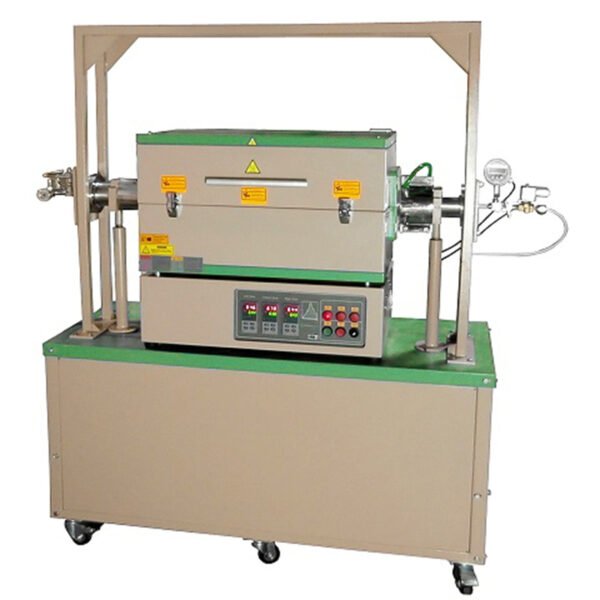
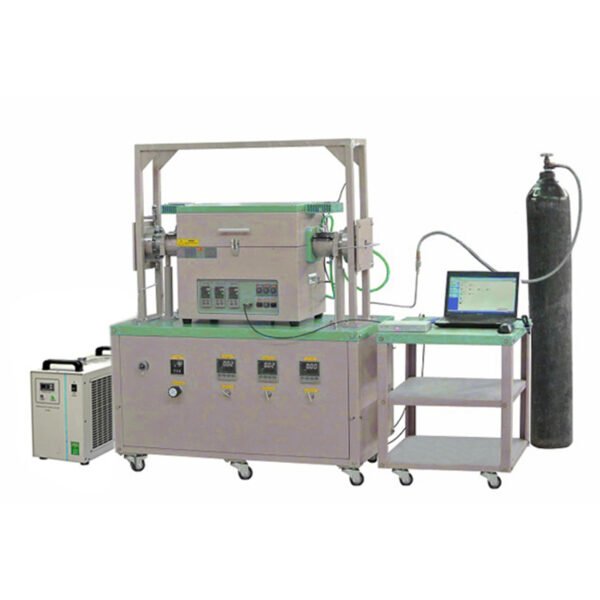
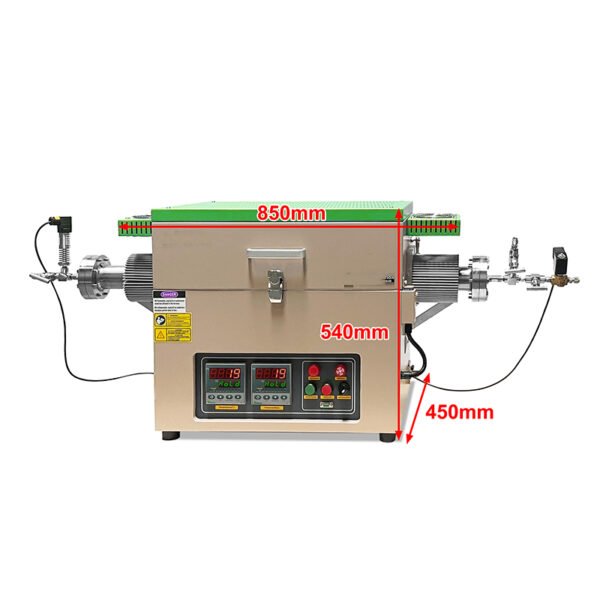
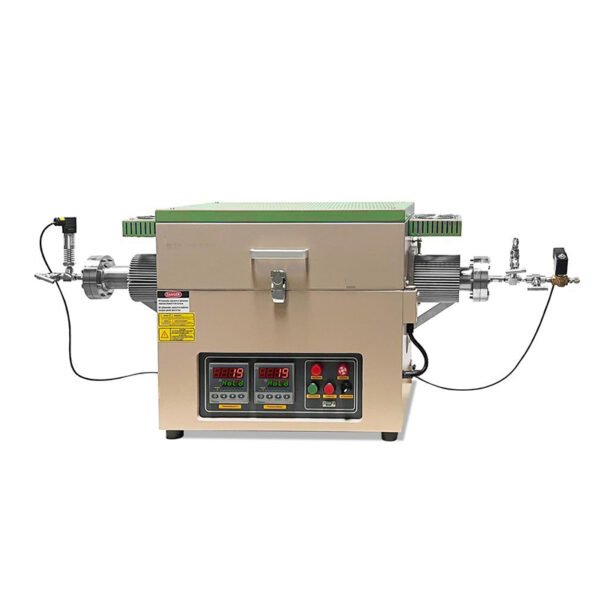
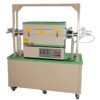
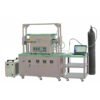
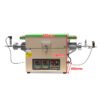
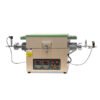
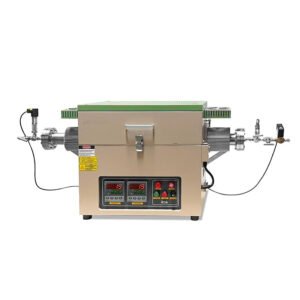
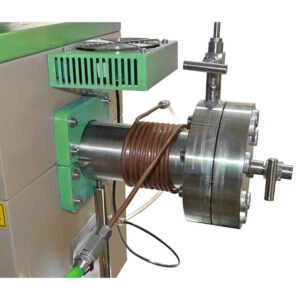
The high-pressure split tube furnaces can be chosen from two kinds of alloy tubes, e.g. Stainless steel 310S refractory alloy or Ni-based superalloy, which offer a solution of heating treatment under high positive pressure with/without inert gas support to process special compound material. The furnace can be heated up to the max. 900°C or 1100°C with the optional vessel.
The high-pressure split tube furnaces can be chosen from two kinds of alloy tubes, e.g. Stainless steel 310S refractory alloy or Ni-based superalloy, which offer a solution of heating treatment under high positive pressure with/without inert gas support to process special compound material. The furnace can be heated up to the max. 900°C or 1100°C with the optional vessel. The operating positive pressure is from 105 to 800 psi according to different heating temperatures.
Heating temperature up to max. 900°C or 1100°C, Depending on the tube alloy
Stainless steel or nickel-base superalloy processing tube is included
Max pressure up to 800 PSI.depended on tube alloy
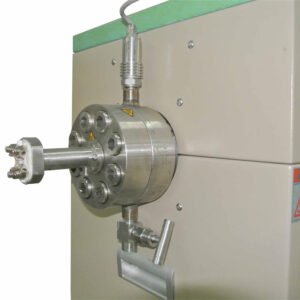
The pressure sensor is installed in the flange. The pressure will be displayed in the pressure controller in the front panel of the furnace. The alarm system is built in the pressure controller. When the pressure exceeds the limit point, the alarm will be activated to release the pressure.
The furnace is able to be controlled by a computer. And the software and USB cable are included.
Main features
1.The device can achieve a pressure of 15Mpa at high temperatures (1100 degrees)
2.using 30 segment fuzzy PID control
3.the temperature control accuracy can reach ± 1 ℃
4.The furnace has high temperature uniformity, can be used under high vacuum, and has an automatic pressure reducing device to make it safer and more reliable.
Specific Industry Applications
Synthesis of Advanced Materials: High pressure tube furnaces are used to synthesize advanced materials such as carbon nanotubes, graphene, and other nanomaterials. The controlled high-pressure environment facilitates the formation of these materials with precise properties, enhancing their performance in various applications.
Ceramics and Composites: For ceramic and composite materials, the high-pressure conditions can lead to denser structures with fewer defects, improving the mechanical and thermal properties of the final product.
Doping and Diffusion Processes: In semiconductor manufacturing, these furnaces are used for doping silicon wafers with impurities, which is crucial for creating the p-n junctions necessary for electronic devices. The high-pressure atmosphere ensures a uniform distribution of dopants.
Epitaxial Growth: High pressure tube furnaces are employed in the epitaxial growth of thin films, where a layer of material is grown on a substrate under controlled conditions to achieve high-quality, defect-free layers that are essential for semiconductor devices.
Phase Transformation Studies: Researchers in metallurgy use high pressure tube furnaces to study phase transformations in metals and alloys. Understanding these transformations under high-pressure conditions can lead to the development of stronger and more durable materials.
Sintering of Metals: For sintering metal powders, the high-pressure environment contributes to increased density and improved bonding between particles, resulting in materials with better mechanical properties.
High-Pressure Reactions: Many chemical reactions require high-pressure environments to proceed efficiently. High pressure tube furnaces provide the necessary conditions for these reactions, facilitating the synthesis of polymers, catalysts, and other chemical products.
Simulation of Geological Conditions: Scientists use high pressure tube furnaces to simulate deep Earth conditions, studying the behavior of minerals and rocks under extreme pressure and temperature. This research helps in understanding geological processes and the formation of natural resources.
Fuel Cell Development: In the development of solid oxide fuel cells (SOFCs), high pressure tube furnaces play a role in the synthesis and characterization of electrolytes and electrodes. These studies contribute to the advancement of clean energy technologies.
Hydrogen Storage Materials: Research into hydrogen storage materials also benefits from high pressure tube furnaces, as they can test the effectiveness of different compounds under high-pressure conditions that mimic real-world usage scenarios.
Nanomaterial Synthesis: High pressure tube furnaces are utilized in the synthesis of nanomaterials, such as nanoparticles and nanowires, where controlled pressure and temperature are critical for achieving desired morphologies and functionalities.
Working Principle
A high pressure tube furnace consists of a heating element, an insulated chamber, a pressure vessel, and a control system. The heating element is typically made of resistive materials like Kanthal or molybdenum disilicide, which can withstand high temperatures.
The pressure vessel is designed to contain gases at pressures above atmospheric levels, usually ranging from a few bars to several kilobars. It is made of materials such as stainless steel or specialized alloys that can resist corrosion and high temperatures.
Heating Element: When electricity is supplied to the heating element, it generates heat through resistance. This heat is then transferred to the pressure vessel and its contents.
Pressure Control: The pressure inside the vessel is controlled via a valve system connected to a pressure regulator. Gases such as hydrogen, argon, or nitrogen can be introduced into the vessel to create a specific atmosphere.
Temperature Control: A temperature controller regulates the heating process to ensure that the desired temperature is achieved and maintained. Thermocouples or other temperature sensors are used to monitor the temperature inside the furnace.
High pressure tube furnaces can operate under a wide range of temperatures and pressures, depending on the specific requirements of the application. They can reach temperatures of up to 1800°C and pressures up to 200 bar or even higher.
The controlled atmosphere and pressure allow for precise material processing, enabling researchers and engineers to explore new materials and refine existing ones under conditions that mimic industrial or natural environments.
SPECIFICATIONS
| GS-TB0701 | GS-TB0702 | |
| Process Vessels (Pls select the tube size in the options bar) | SS310S Stainless Steel alloy 80mm O.D x 70(±2) mm I.D x 1000 mm L or 60mm O.D x 50(±2) x 1000 mm L |
Ni-based superalloy OD 60 x ID 52 x Length 1000 (mm) |
| Copper gasket | For 80mm O.D tube: 99 O.D x 82 I.D x 2.2mm For 60mm O.D tube: 82 O.D x 63.6 I.D x 2.2mm |
For 60mm O.D tube: 82 O.D x 63.6 I.D x 2.2mm |
| Working Pressure vs. Working Temperature | 600 PSI max at ≤500°C
511 PSI max at ≤600°C 428 PSI max at ≤700°C 203 PSI max. at ≤800°C 116 PSI max at ≤900°C Attention: Never heat up above 900°C |
580 PSI (4 Mpa) max. at ≤800°C 362 PSI (2.5 Mpa) max. at ≤900°C174 PSI (1.2Mpa) max. at ≤1000°C 116 PSI (0.8 Mpa) max. at 1100°C |
| Pressure Range | 0~15Mpa | 0~15Mpa |
| Max. Heating Temp. | 900°C | 1100°C |
| Working Gases | Inert gas & Hydrogen | The inert gas, hydrogen, and oxygen |
| Heating Temperature | 900°C max.for < 1hr 800°C continuous |
1100°C max.for < 1hr 1000C for continuous |
| Heating Rate | ≤30°C/min | ≤20°C/min |
| Heating Element | Fe-Cr-Al Alloy doped by Mo | Fe-Cr-Al Alloy doped by Mo |
| Heating Zone | Total length: 440mm Single zone Constant temp. zone: 150mm ±1°C |
Total length: 440mm Single zone Constant temp. zone: 150mm ±1°C |
| Temp. Control | PID control method with over-temp protection Temperature stability: ±1°C |
PID control method with over-temp protection Temperature stability: ±1°C |
| Thermocouple | Omega 3mm OD K Type with high-temperature tolerance (220°C) connector | Omega 3mm OD K Type with high-temperature tolerance (220°C) connector |
| Positive Pressure Sensor | Installed in the high-pressure flange | Installed in the high-pressure flange |
| Pressure Alarm System | The upper limit and lower limit control method Alarm strobe and warning whistle |
The upper limit and lower limit control method Alarm strobe and warning whistle |
| Voltage | AC 220V 50/60Hz | AC 220V 50/60Hz |
| Power | 2.5KW
(20A breaker required) |
2.5KW
(20A breaker required) |
| Application Notes | The heating temperature must be limited by a certain pressure level due to vessel material strength. Please refer to the specifications
The pressure increases while the temperature is rising during operation. So you need to calculate the pressure changing towards your target temperature and set a safe value of pressure during the process The furnace uses a tube with conflate-designed flanges. The safety pressure relief valve is available to be installed at the downstream side. Small quartz or Alumina boat should be used to load the sample into the vessel. Never place the sample directly onto the vessel without a crucible. Vessel service life could be reduced significantly if you do so. You may use gold or nickel foil to wrap the crucible boat to minimize the contamination to the pressure vessel. To measure the electric properties of thermoelectric ceramics under high pressure & temperature conditions, please order an alumina testing fixture and high-pressure electrical feedthrough (10Mpa Max.) with the furnace (additional fee will apply). |
|
| Safety Note | Ni-based Superalloy is a reliable processing tube that can be used under high temperatures and high pressure. It has excellent ductility and tensile property so only creep deformation happens under the overpressure destruction test and is followed by a crack formed (usually at the hot zone at the center of the tube) to release the pressure. Brittle fracture won’t happen in the overpressure destruction test which means no tube explosion will happen under the overpressure of inert gas or safe gas or under other accidents causing overpressure of inert gas or safe gas.
Attention: A two-stage pressure regulator must be installed on the gas cylinder to limit the pressure to below 3 PSI for safe operation. Do not over tightening the flange screws as this may cause permanent damages to the flange or screws. Please refer to the instructions about proper torque for installing CF flange bolts. We recommend you use a torque wrench to tighten the screws with the flange. |
|