WhatsApp: ; Email:
Work

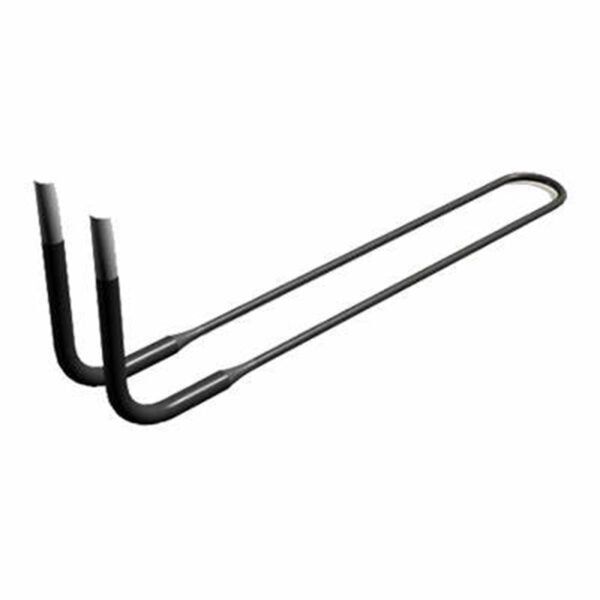
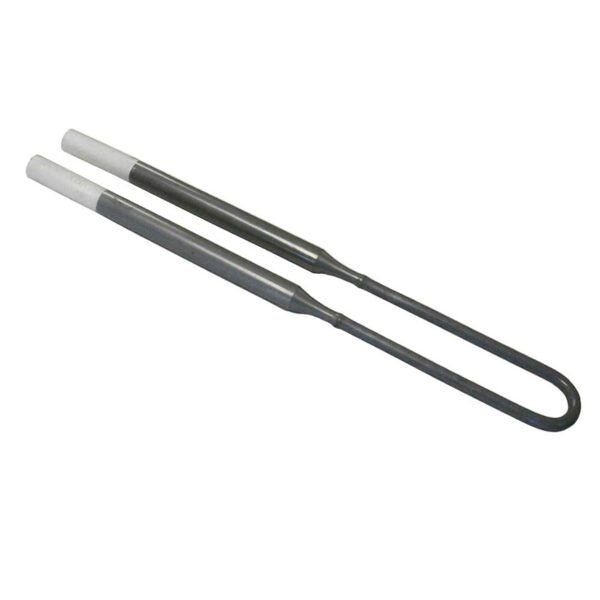
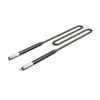
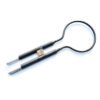
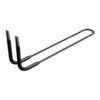
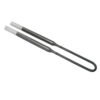
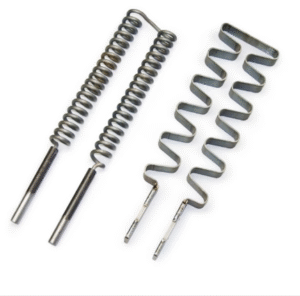
MoSi2 Molybdenum DiSilicide Heater
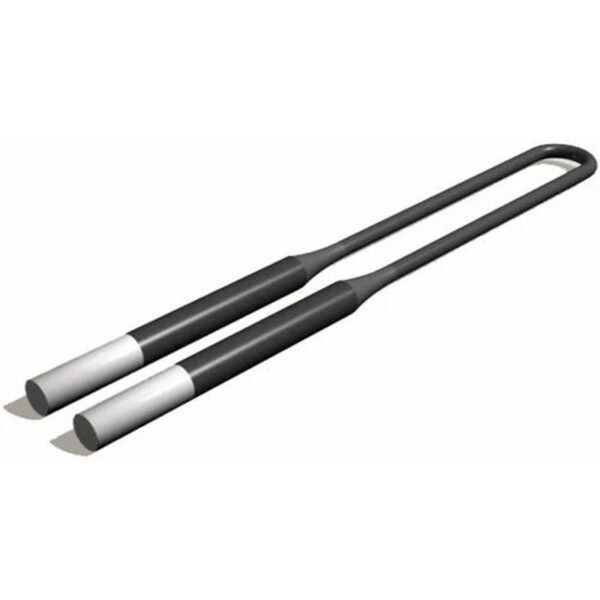
Molybdenum disilicide with a self-forming silica dioxide glazing make up the high-density material known as the MoSi2 heating element. Our heating elements excel across a variety of atmospheres, including oxidizing, inert, carburizing, nitriding, and reducing environments, withstanding temperatures up to 1,850C (3,360ºF).These components last a very long time.
The unique material known as MoSi2 Heating Element combines the best qualities of metallic and ceramic elements. It has a low thermal expansion and, like ceramic materials, is resistant to oxidation and corrosion. Like metallic materials, it also has strong electrical and thermal conductivity. Because of its robustness, the element is immune to thermal shock and can function as a heating element for many years.
Our MoSi2 heating elements includes seven grades with specific features for use in demanding applications and atmospheres, including nitrogen, hydrogen, vacuum and mixtures of endogas and reducing atmospheres.
Key features
High-temperature capability.
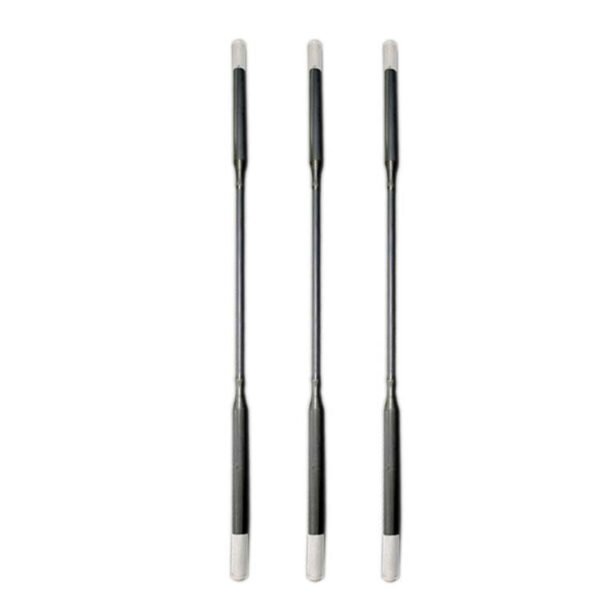
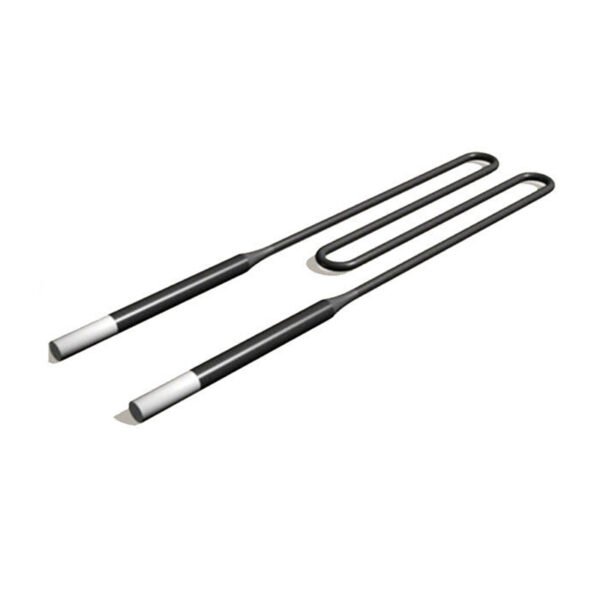
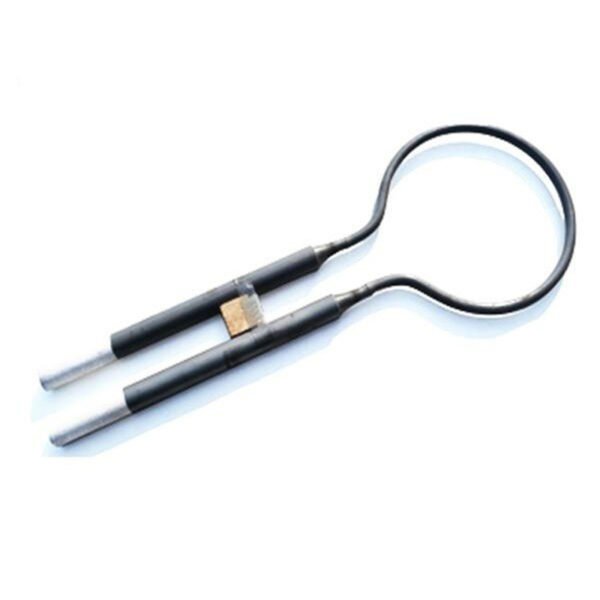
Available as straight or bent elements.
Easily customizable.
Versatile atmosphere and application compatibility.
Extended furnace life.
Minimizes maintenance stops.
Energy efficient.
Boosts productivity.
Safety assurance.
Strong return on investment.
Backed by superior technical support.
Specification
| Material Grade | 1600/1700/1800/1850 |
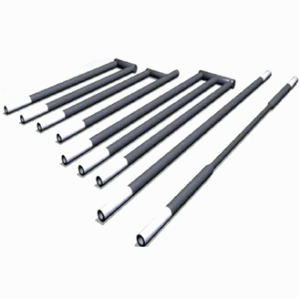
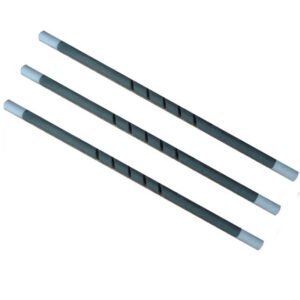
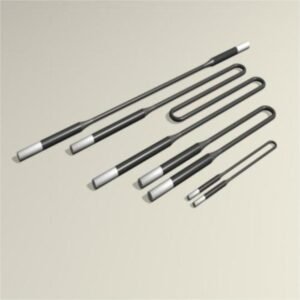
| Shape | U, I, W, UL |
| Hot zone length | 100-300mm |
| Cold end length | 150-300mm |
| Diameter | 6-9mm |
For other shapes and specifications,we can provide customization, please contact us for details.
Application
MoSi2 heating element is extensively used in the industries of metallurgy, glass, ceramic refractory, crystal electronic device, also used in laboratory furnaces, testing equipment and high temperature sintering production furnaces, etc.
Resistivity
As the temperature rises, MOSIL (MoSi2) becomes more resistive. When the elements are coupled to a steady voltage, they can provide high power at lower temperatures and progressively lose power as the temperature rises. This speeds up the furnace’s process of reaching the operational temperature.
Nevertheless, the likelihood of an element overheating decreases together with a decrease in element power.
Even when operating at high temperatures, the MOSIL (MOSI2 Heating element) resistance does not deteriorate. During the first term, there is just a minor (≈ 5%) decrease in resistance.
These characteristics make it simple to replace a failing component without compromising the functionality of other components connected in series.
Metals
All metals that come into contact with MoSi2 produce silicides. At high temperatures, molten metal vapours (bronze, zinc, and copper) tend to react with the components. Metal oxide dust particles in the furnace also react with the protective glaze. It is critical that the components be shielded against molten metal splashes. Metals with melting points below 1300°C can be melted in this type of furnace with proper precautions.
Ceramics
Because the operating temperature of Molybdenum Di Silicide is typically high, reactions occur easily between the silica layer on the component surface and most salts and oxides. This is especially important when the components are supported by ceramics. Ceramics in such cases must be made of stable compounds that are non-reactive with silica, such as silicates. Sillimanite and mullite are two suitable ceramics. Reactions can no longer occur when component temperatures exceed 1600°C.
Elements and tubes
Two-shank The most common design is a U-shaped element. The heating zone is connected to terminals via welding. These terminals are typically twice the diameter of the heating zone.
Two-shank elements can be bent 45° or 90° in the heating zone or at the terminals, whereas four-shank elements are only used horizontally.